A year after the compounding impacts of a high magnitude earthquake and two typhoons that followed closely after , communities continue to rebuild their homes, livelihood and daily lives.
Since the disasters, the Singapore Red Cross (SRC) has worked with the Philippine Red Cross (PRC) and humanitarian partners on the ground to support relief efforts while simultaneously building long-term community resilience. Made possible with the support of donors, relief and recovery efforts ranged from distribution of essential supplies to access to clean water and longer-term livelihood initiatives.
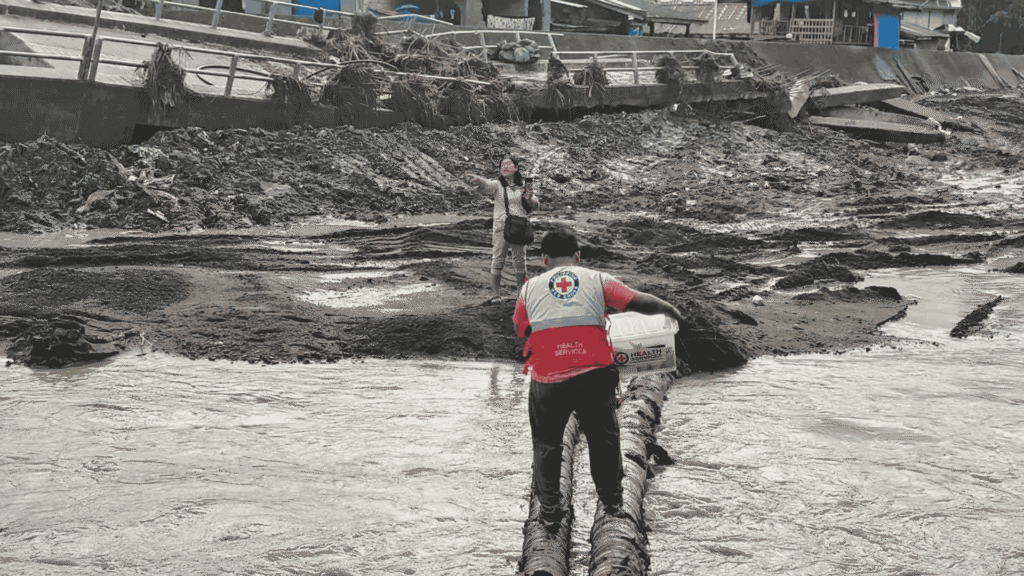
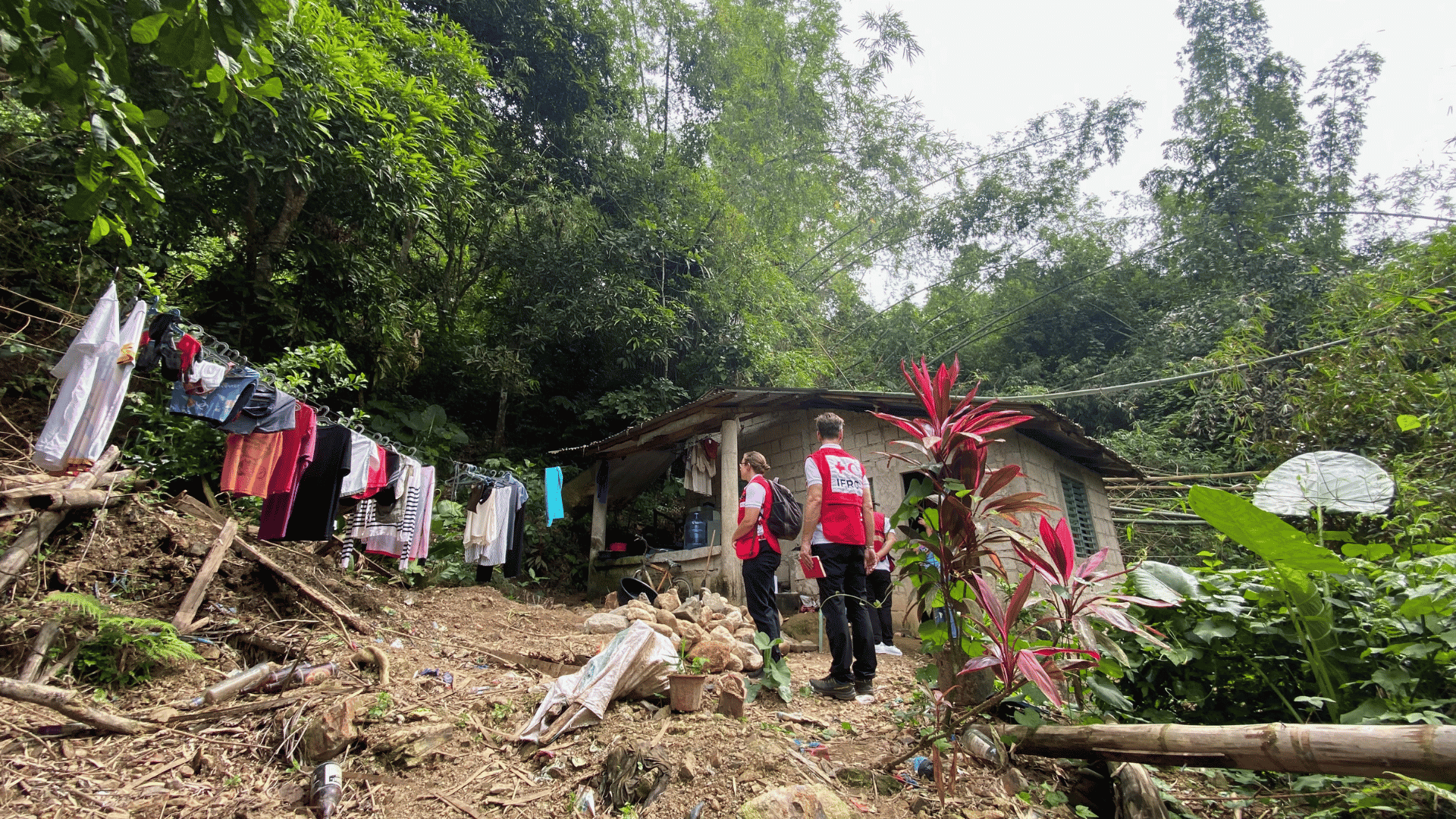
Photo taken by: International Federation of Red Cross and Red Crescent Societies (IFRC)
One disaster followed by another
On 30 September 2025, a magnitude 6.9 earthquake that struck off the coast of Bogo City in northern Cebu brought damages to roads and bridges, widespread power outages and homes.
Before communities had time to recover, Typhoon Tino (Kalmaegi) made multiple landfalls across Visayas region and Palawan. Strong winds, heavy rainfall, flooding and landslides caused further damage to infrastructure, houses and livelihoods.
Super Typhoon Uwan followed shortly after and brought storm surges, torrential rains and destructive winds to Luzon and nearby coastal provinces.
Together, these disasters left an estimated 13 million people across the country in need of humanitarian assistance, including health care, shelter, food and livelihood, recovery, and water and sanitation.
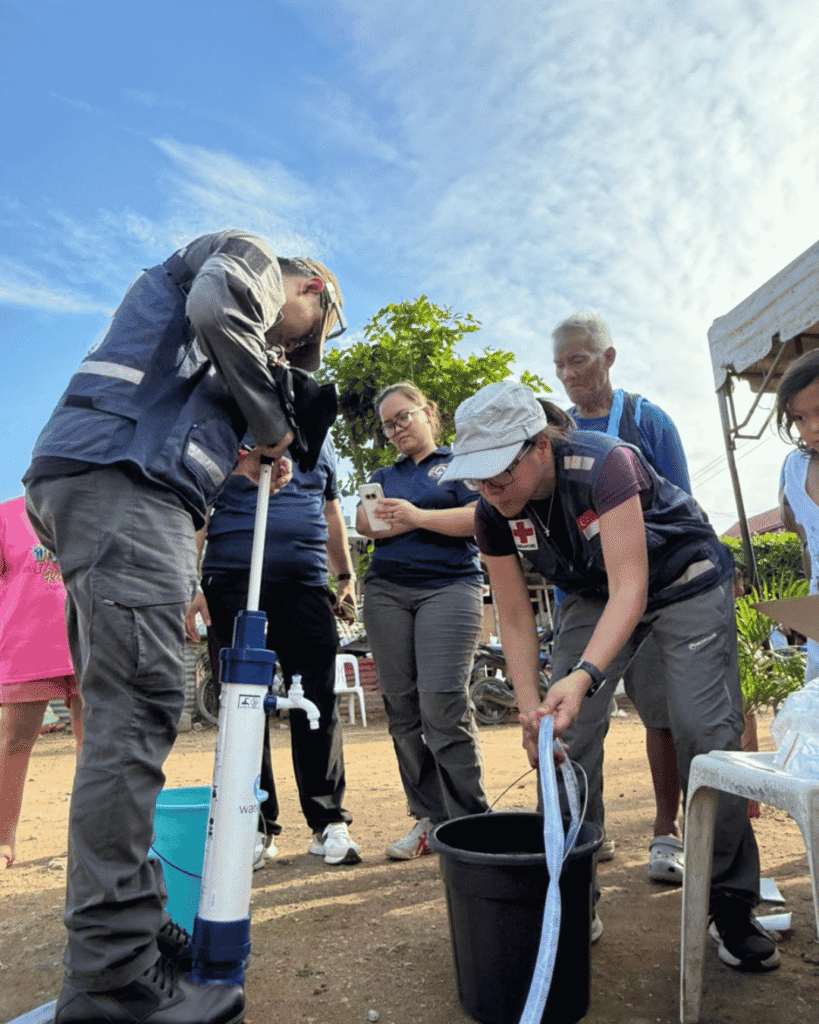
SRC volunteers demonstrating the use of a water filtration system to community members.
Singapore Red Cross support
With the support of donors and partners, SRC raised S$193,230.82 through its public appeal to support relief and recovery efforts. SRC also pledged S$50,000 to the Philippine Red Cross.
Working with the Philippine Red Cross and humanitarian partners on ground, SRC’s support reached more than 1,200 individuals. This includes:
- The restoration of water, sanitation and hygiene (WASH) facilities to improve access to safe water and adequate sanitation
- 30 water filters distributed to communities in Cebu to support access to safe drinking water.
- Livelihood support to help communities restore sources of income.
SRC volunteers were also deployed to Cebu to support relief distributions, provide training on the use of the water filters, and conduct site visits and needs assessments for longer-term recovery initiatives.
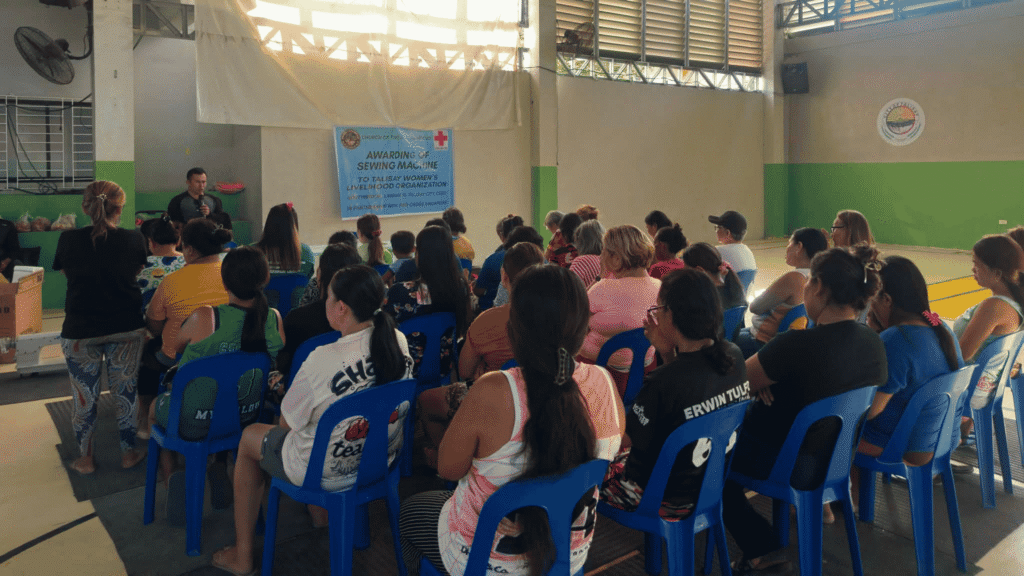
Foundational training in rag-making for communities.
Supporting livelihood recovery
In Talisay City, Cebu, rag-making is an important local livelihood activity with established market demand. To support longer-term recovery, SRC worked with the Church of the Nazarene CVD to provide communities with equipment, essential tools and foundational training in rag-making.
The Church of the Nazarene CVD has built strong relationships and gained the trust of the communities it serves through its efforts to strengthen community resilience and provide support during the annual typhoon season. Its permanent presence gives it a detailed understanding of the local context and identifying communities’ needs while enabling it to serve as a first responder during emergencies. This local knowledge, trust and community acceptance are essential to delivering effective humanitarian work.
For A.Y, the programme has already made a practical difference. With her new skill and equipment, she was able to meet an important household need that her family had previously struggled to afford.
“Before, we were only connected to our neighbour’s electricity. Through the income I earned from this livelihood project, I was able to pay ₱13,000 for our own electricity connection. I am very thankful because this program has helped improve our family’s living condition and has given us greater independence” – A.Y
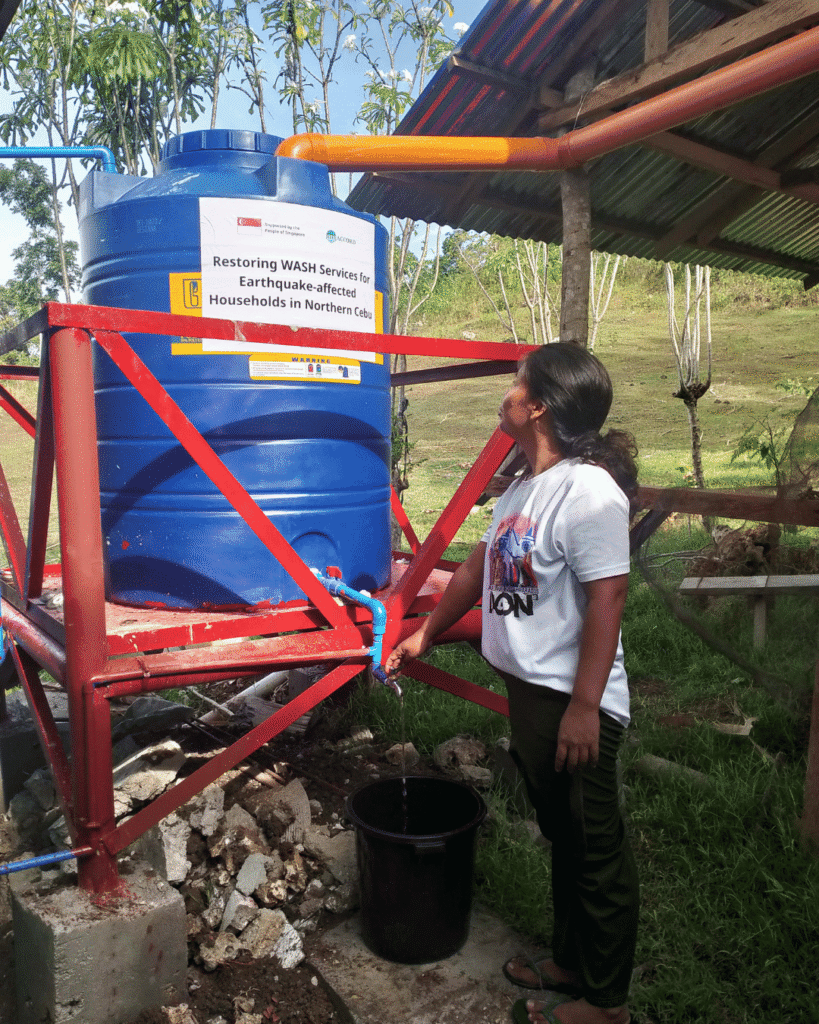
C. fetching water from RWH tank
Restoring WASH services with the community
In San Remigio, Cebu, access to water and sanitation facilities was already limited before the earthquake. Damage from the earthquake placed further pressure on these essential services. SRC worked with local partner, ACCORD, Inc to address the community’s remaining WASH needs, with the community involved in planning and implementation.
For Barangay Health Worker C., it was her first time participating in a community project, but she actively supported the validation process, invited residents to meetings, shared suggestions and helped with construction. More residents began contributing their time as the work progressed, turning the construction into a collective effort.
“Through our cooperation and unity, we found an improved sense of camaraderie and understanding.” – C.
The new communal latrine and water collection and filtration facilities have improved access to WASH services, while sturdy doors, ramps and railings provide greater privacy and ease of use for older persons, women and children. For C. the most meaningful change was the stronger sense of bayanihan, or community volunteerism, and residents’ shared responsibility for maintaining the facility.
Part of a wider Red Cross Red Crescent Movement
Across the affected areas, the Philippine Red Cross led the response with support from the International Federation of Red Cross and Red Crescent Societies (IFRC), the Singapore Red Cross and other partner National Societies.
The Movement response reached an estimated 52,198 people. Families and communities received shelter and essential household items, water, sanitation and hygiene support, healthcare and mental health and psychosocial support, as well as food and multipurpose cash assistance. As the response progressed support also extended to livelihoods and longer-term recovery support.
Looking ahead
While progress has been made, some communities are still rebuilding their homes, restoring their livelihoods and returning to their daily routines.
SRC remains committed to supporting longer-term recovery efforts while working with partners to strengthen local preparedness for future preparedness.
We thank everyone whose support has helped communities in the Philippines meet immediate needs and continue their recovery beyond the initial emergency.