Blood Donation
Can I donate after visiting the dentist recently?
For the following dental work:
- Scaling or dental filling: you can donate after 1 day.
- Tooth extraction: you can donate after 3 days.
- Root canal treatment: you can donate after 7 days.
- Wisdom tooth extraction (1 or more): you can donate after 1 month.
For more information or if you need further clarification, please call 6213 0626
Can I donate blood if I drink or smoke?
You can donate blood! However, you should not donate when you’re under the influence of alcohol. It is important that you’re in the best state of mind when you provide details about your health history to ensure blood safety.
Do I need to know my blood type before donating?
You do not need to know your blood type beforehand, nor will our staff be able to test your blood type for you prior to your donation. However, following your donation, your blood will be tested for its type and you will be informed of your blood group on your next donation.
How do I begin the blood donation process?
How do I find out my blood type?
ABO and Rhesus testing is performed on each and every unit of blood donated to ensure patient-blood compatibility.
If you have donated blood before, you can check your blood group through the DonateBlood app, available on Android and iOS.
If you have not donated before, you do not need to know your blood type beforehand — it will be tested after your donation and you will be informed of your blood group on your next visit.
How do I plan my donation schedule around travel and holidays?
Travel
- Some travel destinations have different waiting periods for blood donation. Consider donating blood before you travel.
Holiday periods/long weekends
- Blood stocks tend to dip during long weekends and holiday periods. Consider scheduling your donation during holiday periods and long weekends. This would ensure that our blood-stock levels remain at healthy levels at a time when many regular donors may not be available.
How long does the blood donation process take?
Each blood donation usually takes 45-60 minutes and up to 90 minutes for an apheresis donation.
How many blood groups are there? What do the letter, ‘+’ and ‘–’ mean?
ABO and Rhesus (Rh) are the two most important blood group systems.
Within the ABO system, there are four main groups — A, B, O, AB — determined by the presence or absence of A and B antigens on the surface of red blood cells. If you are group A, this means A markers are present on the surface of your red cells; group AB means both A and B markers are present; while group O means there are no A or B markers on the surface of your red cells.
Within the Rh system, depending on the presence or absence of the RhD antigen, you can be either RhD positive (+) or RhD negative (–).
This results in a total of eight main blood groups: A+, A–, B+, B–, O+, O–, AB+ and AB–.
Fun fact: There are close to 40 human blood group systems recognised by the International Society of Blood Transfusion (ISBT), with ABO and Rh being just two of them.
How should I prepare? Should I fast or eat specific foods?
Please eat a light meal, drink plenty of water and have a good night’s rest before donation. No fasting is needed before blood donation. Should you feel unwell on the day of donation, take a rest and consider postponing the donation until you feel better.
Avoid drinking tea or coffee and consuming calcium-rich foods (milk, cheese, yogurt) with iron-rich meals or iron supplements. Tannins in tea, caffeine in coffee and calcium reduce iron absorption. Have your coffee or tea after your meals.
I had a fever, flu and cough a few days ago. Am I still eligible to donate blood?
For cold, sore throat, flu or any other symptoms (except for fever), please wait 1 week after you’ve fully recovered before donating blood. For fever symptoms, please wait at least 4 weeks after you’ve fully recovered before donating.
I have a tattoo. Am I allowed to donate blood?
If the tattoo or body piercings was not done using sterile, single use, disposable needles (or if you are not sure), you can donate 3 months after the last tattoo or body piercing procedure.
I recently travelled. Can I still donate?
Visiting or travelling to different regions of the world may make you ineligible to donate blood for a period of time. This is because some infections caught abroad can be transmitted through blood transfusion.
Please read up HSA’s advisory on blood donation after overseas travel, or call 6220 0183 to check your eligibility.
I resided in the UK for a certain period of time. Can I donate blood?
The following donors are not eligible to donate due to the risk of transmitting Creutzfeld Jakob Disease (CJD) and variant Creutzfeld Jakob Disease by blood transfusion.
- Donors who have been diagnosed with CJD, vCJD or any other Transmissible Spongiform Encephalopathies (TSE).
- Donors who are considered to have an increased risk for CJD,
- Received a dura mater transplant,
- taken human pituitary-derived hormones,
- have one or more blood relatives diagnosed with familial prion disease (e.g., familial CJD, Gerstmann-Sträussler-Scheinker syndrome (GSS) and fatal familial insomnia (FFI),
- received a corneal transplant.
- Donors who have received a blood transfusion in the United Kingdom, the Republic of Ireland or France between 1980 and present.
Donors who were previously deferred due to stay in the United Kingdom, Republic of Ireland, France and other countries in Europe during the affected period may now donate by apheresis. To know more about the change in criteria, click here.
I’m 16 years old. I want to donate blood. Do I have to submit the consent form?
For individuals aged 16 or 17 who wish to donate blood, they are required to submit a signed parental consent form. This is a necessary first step for anyone aged 16 or 17 before they are allowed to register for blood donation.
I’m a foreigner currently residing in Singapore. Can I donate blood?
For blood donations in Singapore, you are required to provide your residential address details (valid for 3 months from your intended donation date) for registration and a contact number by which we can contact you in case of an emergency or for clarification is needed.
I’m vegetarian. What can I eat to increase my haemoglobin level?
Iron-rich foods, such as lentils, pumpkin seeds, beans, dates, longans, grains, nuts, and green, leafy vegetables can help to ensure you meet the requirements for blood donation. Having a diet rich in Vitamin C can also help as it increases the absorption of iron in your body.
Taking iron supplements a week before your scheduled donation can also make a difference.
At the same time, avoid drinking tea/coffee/caffeine-rich drinks 1 hour before and after food, as caffeine can reduce the absorption of iron by more than 80%.
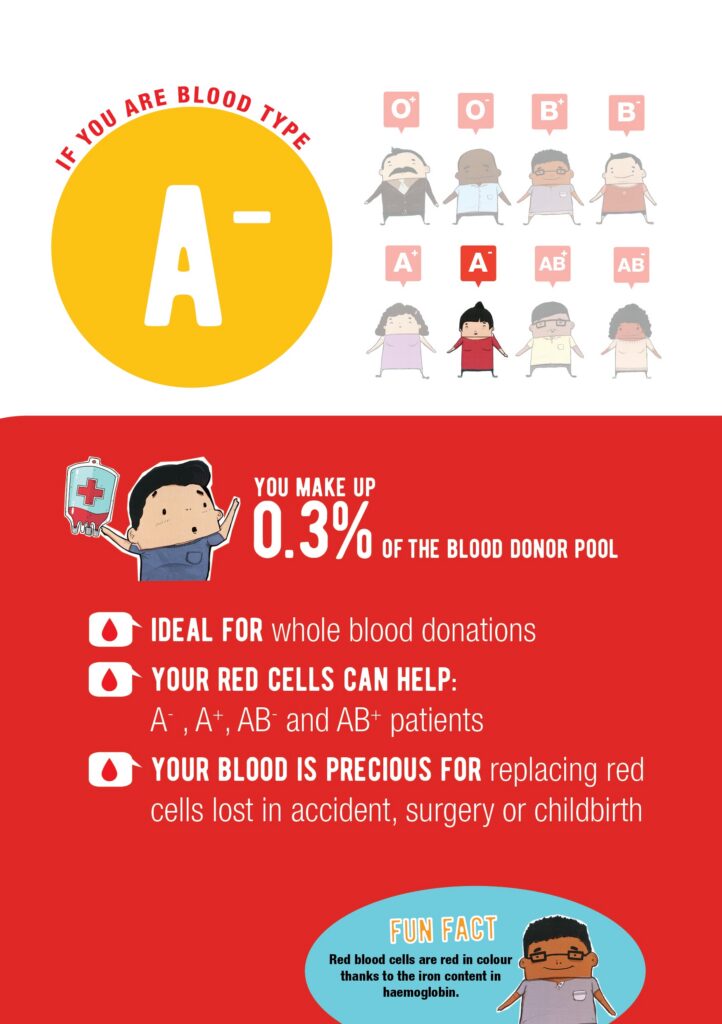
If you are blood type A–
You make up 0.3% of the blood donor pool.
Ideal for: whole blood donations
Your red cells can help: A–, A+, AB– and AB+ patients
Your blood is precious for: replacing red cells lost in accident, surgery or childbirth
Fun fact: Red blood cells are red in colour thanks to the iron content in haemoglobin.
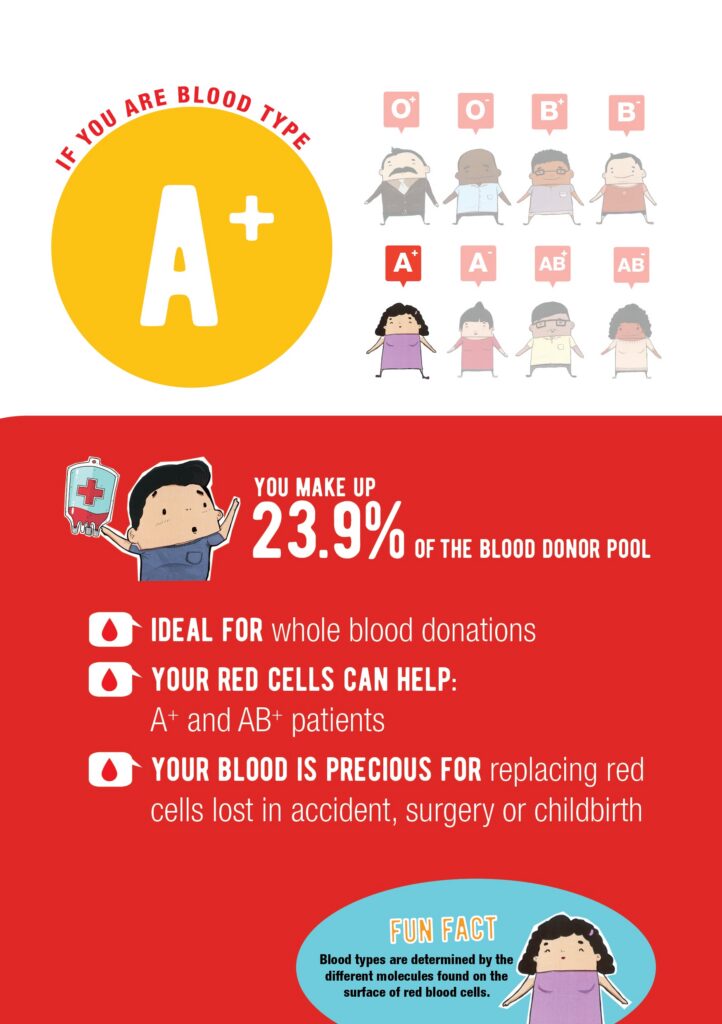
If you are blood type A+
You make up 23.9% of the blood donor pool.
Ideal for: whole blood donations
Your red cells can help: A+ and AB+ patients
Your blood is precious for: replacing red cells lost in accident, surgery or childbirth
Fun fact: Blood types are determined by the different molecules found on the surface of red blood cells.
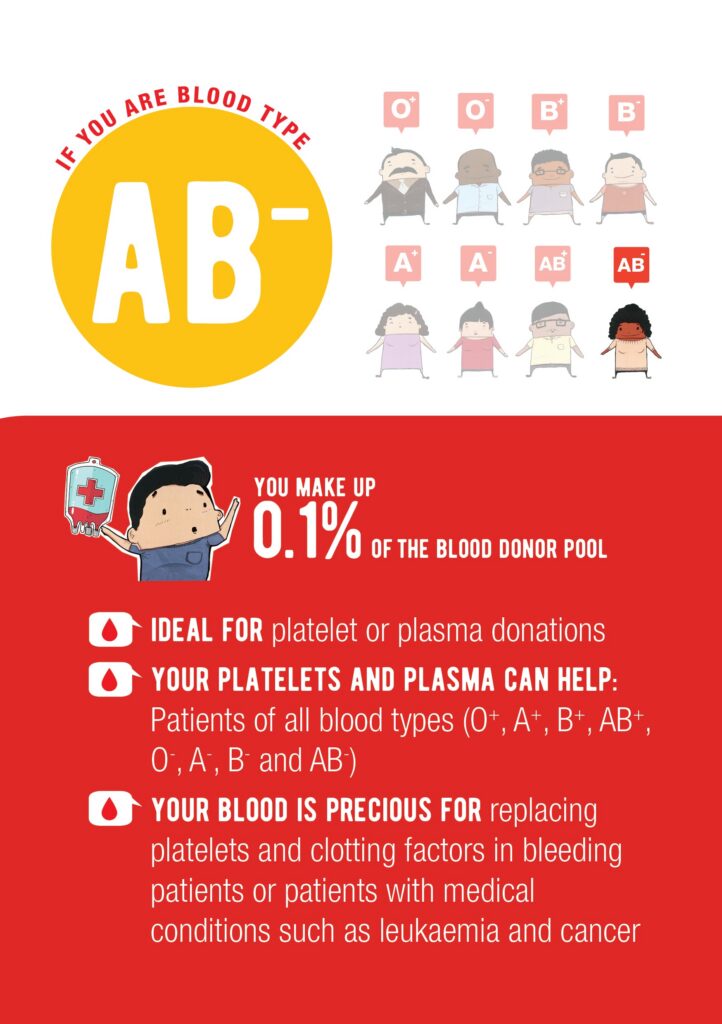
If you are blood type AB–
You make up 0.1% of the blood donor pool.
Ideal for: platelet or plasma donations
Your platelets and plasma can help: Patients of all blood types (O+, A+, B+, AB+, O–, A–, B– and AB–)
Your blood is precious for: replacing platelets and clotting factors in bleeding patients or patients with medical conditions such as leukaemia and cancer
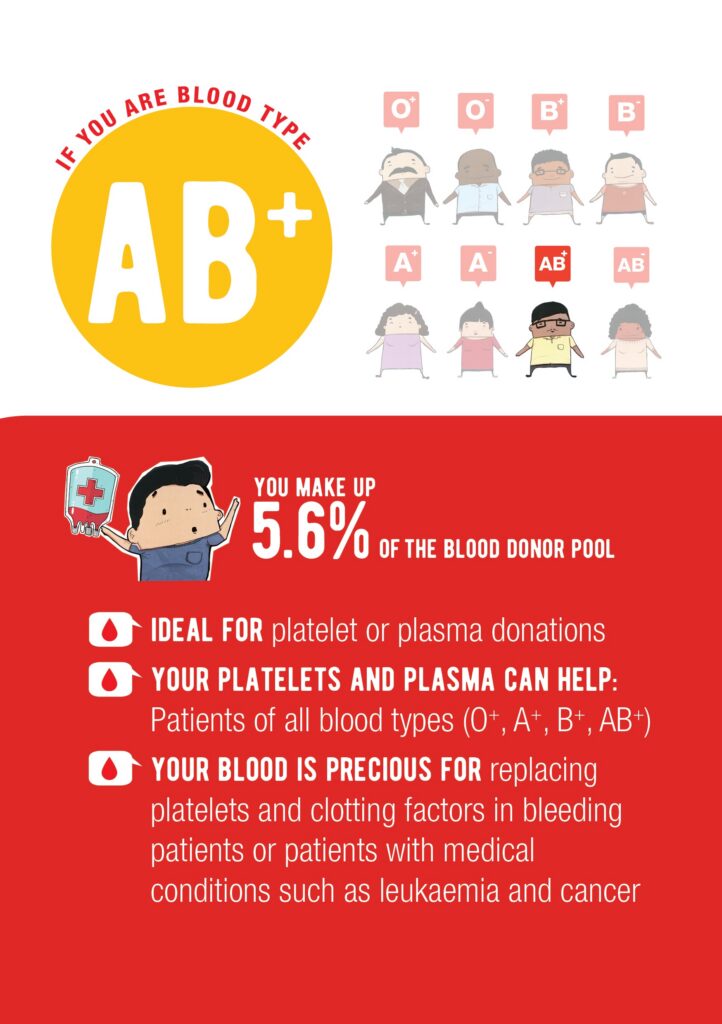
If you are blood type AB+
You make up 5.6% of the blood donor pool.
Ideal for: platelet or plasma donations
Your platelets and plasma can help: Patients of all blood types (O+, A+, B+, AB+)
Your blood is precious for: replacing platelets and clotting factors in bleeding patients or patients with medical conditions such as leukaemia and cancer
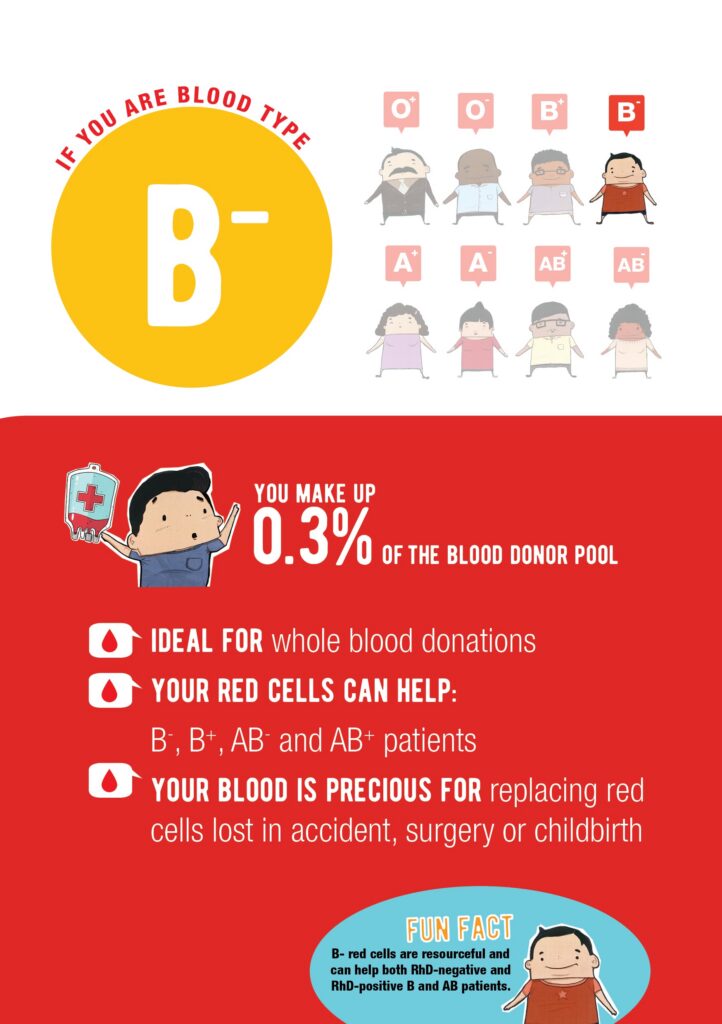
If you are blood type B–
You make up 0.3% of the blood donor pool.
Ideal for: whole blood donations
Your red cells can help: B–, B+, AB– and AB+ patients
Your blood is precious for: replacing red cells lost in accident, surgery or childbirth
Fun fact: B– red cells are resourceful and can help both RhD-negative and RhD-positive B and AB patients.
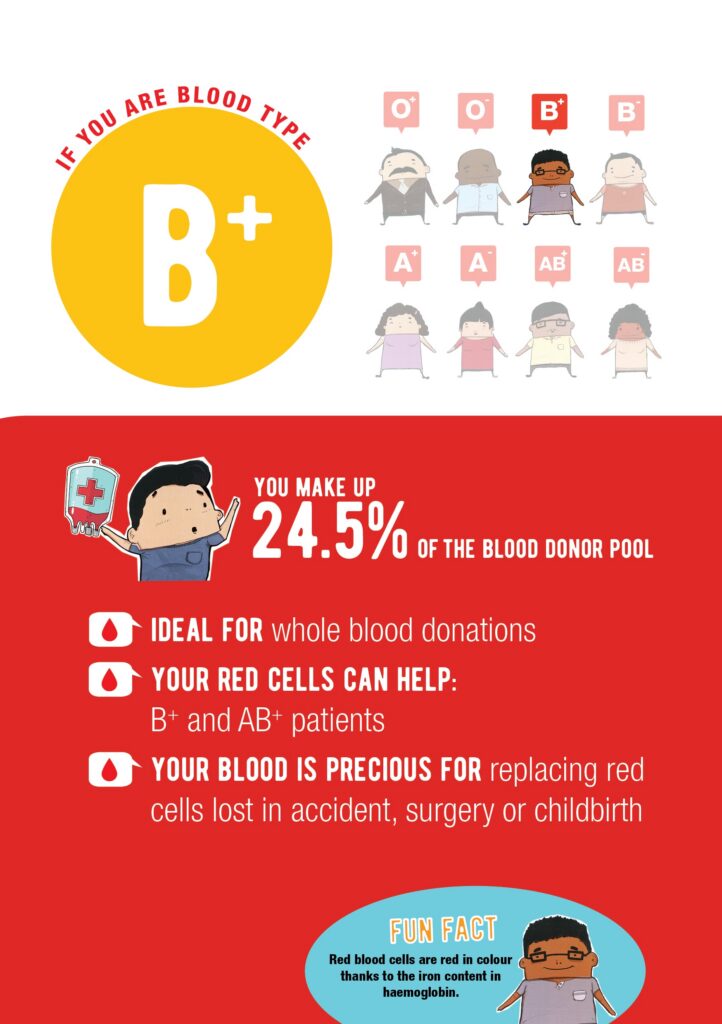
If you are blood type B+
You make up 24.5% of the blood donor pool.
Ideal for: whole blood donations
Your red cells can help: B+ and AB+ patients
Your blood is precious for: replacing red cells lost in accident, surgery or childbirth
Fun fact: Red blood cells are red in colour thanks to the iron content in haemoglobin.
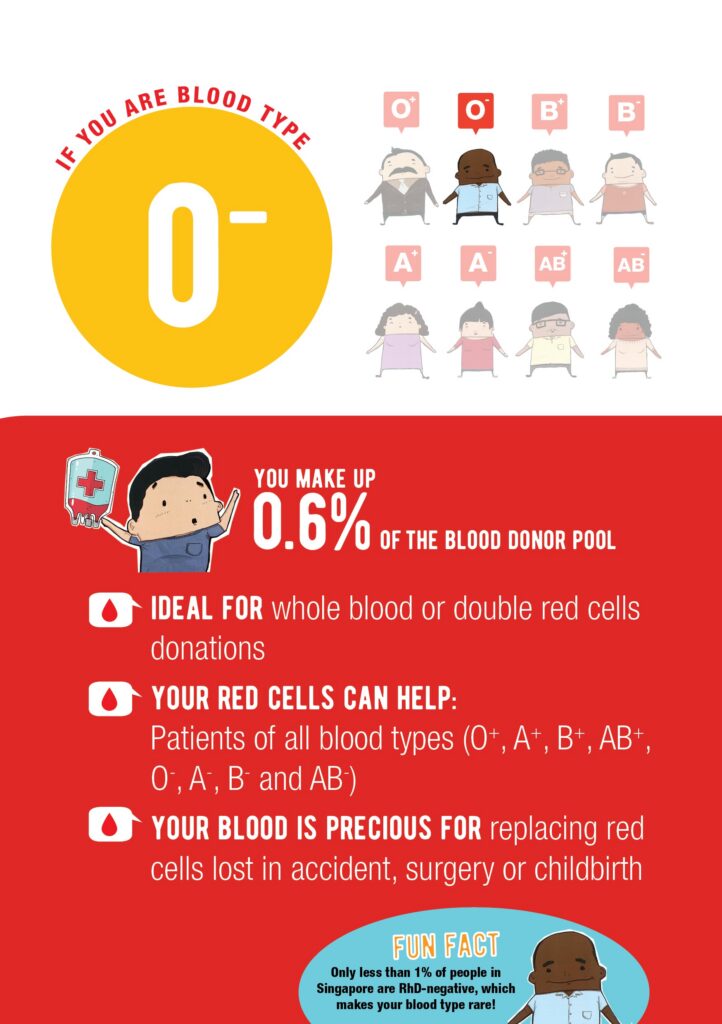
If you are blood type O–
You make up 0.6% of the blood donor pool.
Ideal for: whole blood or double red cells donations
Your red cells can help: Patients of all blood types (O+, A+, B+, AB+, O–, A–, B– and AB–)
Your blood is precious for: replacing red cells lost in accident, surgery or childbirth
Fun fact: Only less than 1% of people in Singapore are RhD-negative, which makes your blood type rare!
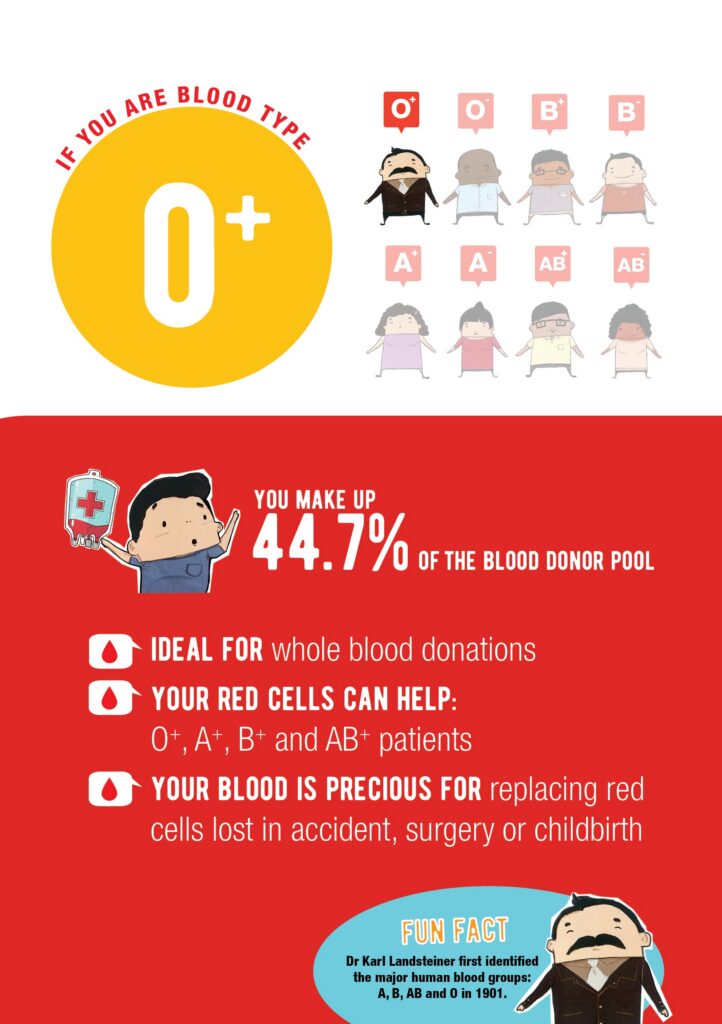
If you are blood type O+
You make up 44.7% of the blood donor pool.
Ideal for: whole blood donations
Your red cells can help: O+, A+, B+ and AB+ patients
Your blood is precious for: replacing red cells lost in accident, surgery or childbirth
Fun fact: Dr Karl Landsteiner first identified the major human blood groups — A, B, AB and O — in 1901.
Is it safe to donate blood?
Blood donation is a safe process. The average adult has 4 to 5 litres of blood. During a donation, only 350 to 450 ml of blood is drawn. About 8% to 12% of your blood volume (depending on your weight) will be taken during blood donation. The fluid (plasma) portion of your donated blood will be replaced in a few days.
My blood donation is often unsuccessful due to low haemoglobin count. What can I do?
Iron deficiency can be prevented by eating a well-balanced diet that includes iron-rich foods. Iron from meat and seafood sources is better absorbed by the body. However, you can improve iron absorption from non-meat and non-seafood sources by consuming them together with foods and liquids rich in Vitamin C.
Foods that are rich in iron content can be found in the following (ranked from highest to lowest per standard serving with each category):
Vegetable
- Kang kong
- Spinach (bayam pasir)
- Chinese kale (kai lan)
Meat and seafood
- Pork kidney
- Chicken liver or pork liver
- Lean beef or lean mutton
- Canned tomato sardines
- Lean pork
Beans, nuts, seeds, soy products
- Lentils
- Green gram or red gram
- Cashew nuts
- Sunflower seeds or watermelon seeds
- White soya beans
- Pistachios
- Soya beancurd, tofu
Fruits
- Dried figs or dried longans
- Dried black dates or dried red dates
- Semi-dried prunes
Rice and alternatives
- Bran flakes
- Cornflakes
- Wholemeal pasta
The minimum weight requirement to donate blood is 45kg. Why is that so?
Blood makes up about 7% of our body weight. We collect 350ml from those who weigh 45-50kg and 450ml from anyone weighing above 50kg.
Collecting less than 300ml of blood is insufficient and taking more than that from someone weighing less than 45kg may cause them to feel giddy.
There is a minimum requirement for haemoglobin level. What does this mean?
Haemoglobin (Hb) is a specialised protein in red blood cells that carries oxygen to the tissues and returns carbon dioxide from tissues to the lungs. Iron is essential for the manufacture of haemoglobin.
Prior to each blood donation, you will be tested for your Hb level through a simple finger-prick test at the blood donation site. Donors must have a Hb level of at least 12.5g/dL for females and 13.0g/dL for males before they can donate blood. This is to ensure the safety of the donor as frequent blood donations without sufficient replacement of the iron can lead to iron deficiency anaemia.
What are the general eligibility criteria?
To donate blood, you must:
- be aged between 16 and 60 (Youths aged 16 and 17 will need to complete and bring a signed parental consent form)
- weigh at least 45kg
- are in good health
- do not have any symptoms of infection (e.g. sore throat, cough, runny nose, diarrhoea) for at least one week
- did not have fever in the last four weeks
- have a haemoglobin level of at least 12.5g/dL for females, and at least 13.0g/dL for males. (A test will be administered by trained nurses at the donation site.)
What happens after I donate blood?
Most people will feel okay after the donation. Some donors might experience slight giddiness. For all blood donors, the nurse will ask them to rest on the donation bench for 10 mins after their donation.
If you feel slightly giddy after the donation, continue to rest on the donation bench after the 10 mins or at the refreshment area. Only leave when you feel ok. It is not necessary to eat more after the blood donation to compensate. Blood volume can be replaced just by drinking plenty of fluids.
You should avoid strenuous exercise after donating. Your athletic performance might be slightly lower for the next 3 days.
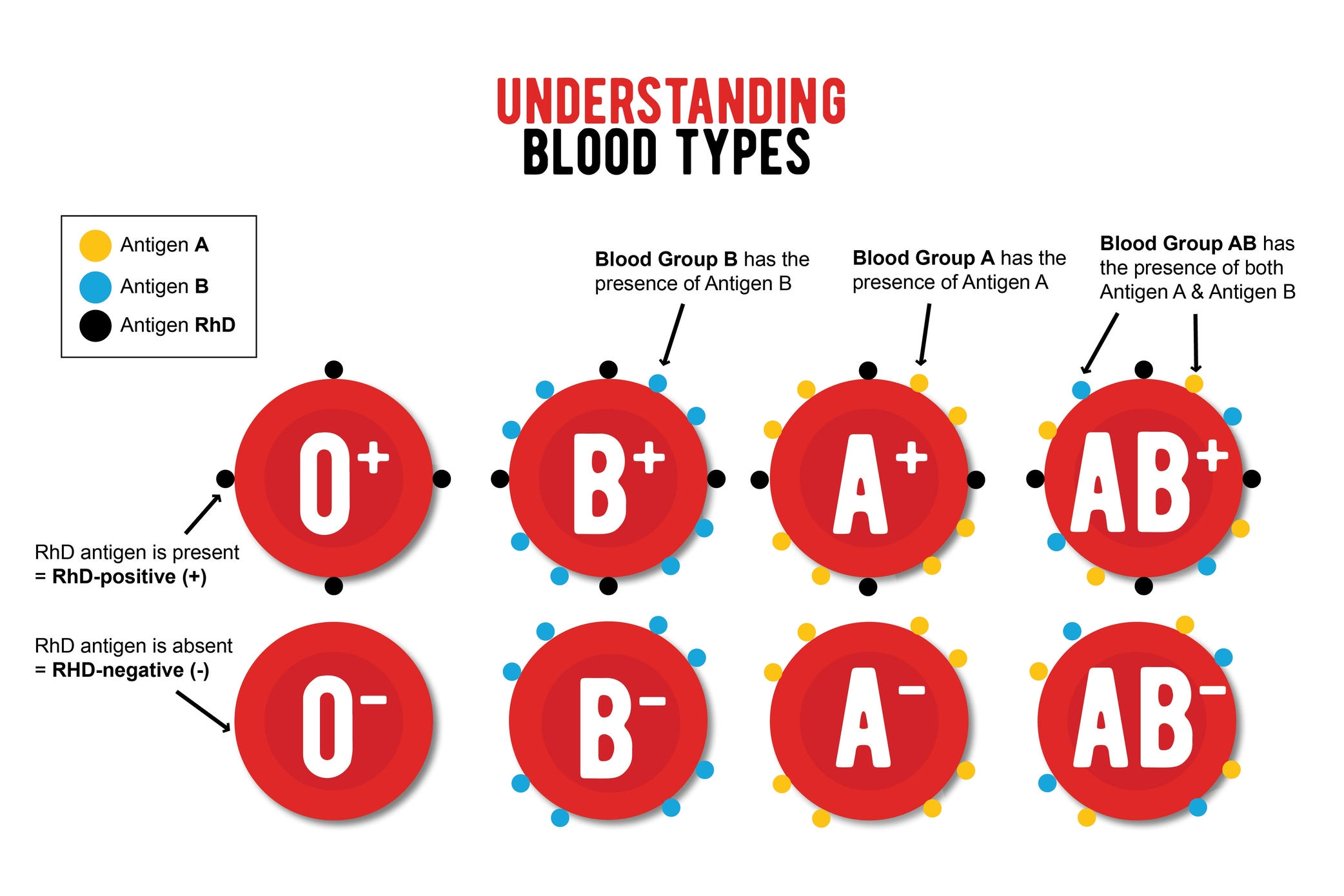
What is an antigen, and how does it determine my blood type?
Antigens are markers found on the surface of your red blood cells, and the combination you carry is what gives you your blood type.
• Blood Group A has the presence of Antigen A
• Blood Group B has the presence of Antigen B
• Blood Group AB has the presence of both Antigen A and Antigen B
• Blood Group O has neither Antigen A nor Antigen B
Separately, if the RhD antigen is present, you are RhD-positive (+). If it is absent, you are RhD-negative (–).
Fun fact: Each drop of blood contains 200–300 million red blood cells, and each red cell has more than a million markers on its surface.
What is the interval between donations?
You should wait at least 12 weeks before making your next blood donation. For apheresis donations, the waiting period is 4 weeks between donations.
What is the population like for the different blood groups in Singapore?
In Singapore, most people are Rhesus positive (A+, B+, O+, AB+), and less than 1% of the population are Rhesus negative (A–, B–, O– and AB–).
Rhesus-negative blood is considered rare and precious because patients who have such blood are recommended to receive Rhesus-negative blood.
Share of the blood donor pool:
| Blood type | % of donor pool |
| O+ | 44.7% |
| B+ | 24.5% |
| A+ | 23.9% |
| AB+ | 5.6% |
| O– | 0.6% |
| A– | 0.3% |
| B– | 0.3% |
| AB– | 0.1% |
What should I do after a donation?
To prevent bruising and to promote healing at the needle site, you need to avoid lifting or carrying heavy items for at least 12 hours.
You will also need to avoid undertaking any strenuous or athletic activities for 24 hours to enable your body to adjust to the donation.
Continue to hydrate yourself throughout the day to help your body replenish the donated blood.
What tests are done to ensure that my blood is safe for patients?
To ensure all patients receive the safest blood possible, the Health Sciences Authority (HSA) screens and processes all donated blood before it is transfused to patients.
Blood component processing
To optimise blood usage and to benefit more patients, every bag of donated blood is processed into different components:
- Red Blood Cells: used to treat severe anaemia or during surgery, childbirth
- Platelets: used for dengue fever, leukaemia and cancer patients
- Fresh Frozen Plasma: used to help manage blood clots during bleeding or infection.
Infectious diseases testing
All donated blood is screened for infectious diseases, including HIV, hepatitis B, hepatitis C, hepatitis E and syphilis. Selected components or units may also be tested for malaria or bacterial contamination.
Blood group testing
This ensures that the donated blood is given to a patient with a compatible blood type.
Antibody screen
This is to ensure that there is no high level of abnormal antibodies in the donated blood that may be harmful to a patient following a transfusion.
Storage of blood products
All blood products must be stored under carefully monitored and controlled temperatures and conditions. They are in an optimal state when transfused to patients.
When should I not donate blood?
In general, if you’re currently undergoing treatment for a major illness or surgery, or (for women) if you’re pregnant or experiencing heavy menstrual flow, you’re advised to delay your blood donation for the time being.
For donors who have recently travelled overseas, there are also certain restrictions depending on the location you travelled to.
Visit www.hsa.gov.sg/blood-donation/can-i-donate to check your eligibility by doing a short quiz.
Where can I donate blood?
You can donate at our Bloodbank@HSA, @Dhoby Ghaut, @Westgate Tower, @Woodlands or @OnePunggol. However, apheresis donation is only available at Bloodbank@HSA.
You can also choose to donate at any of our community blood-drives, which are held regularly in different locations across Singapore. To reduce waiting time, you may wish to make an appointment for your donation by calling us on 6220 0183 or making an online booking using your Singpass.
You can also download the DonateBlood App to keep updated on blood drive locations and make appointments.
Which blood groups can my blood help?
Not all blood groups are compatible with one another, so your donation is matched to patients whose blood group is compatible with yours.
| If you are | Ideal donation type | Your donation can help |
| O+ | Whole blood | O+, A+, B+ and AB+ patients |
| O– | Whole blood or double red cells | Patients of all blood types (O+, A+, B+, AB+, O–, A–, B– and AB–) |
| A+ | Whole blood | A+ and AB+ patients |
| A– | Whole blood | A–, A+, AB– and AB+ patients |
| B+ | Whole blood | B+ and AB+ patients |
| B– | Whole blood | B–, B+, AB– and AB+ patients |
| AB+ | Platelets or plasma | Patients of all blood types (O+, A+, B+, AB+) |
| AB– | Platelets or plasma | Patients of all blood types (O+, A+, B+, AB+, O–, A–, B– and AB–) |
Find your blood type below to see what your donation does.