


In an emergency, there is rarely time to wait for the ‘right’ person to arrive.
Most of the time, the person who steps forward is simply a passer-by, a colleague or a family member. Someone who happens to be there and knows what to do.
Yet for many of us, the thought of rendering first aid can feel intimidating. What if we are not trained enough to help? What if we do something wrong?
This World First Aid Day, we meet four people who found themselves in very different situations where someone needed help. Their stories show that first aid is not a skill reserved for medical professionals, but something anyone can learn and with practice, anyone can have the confidence to use.
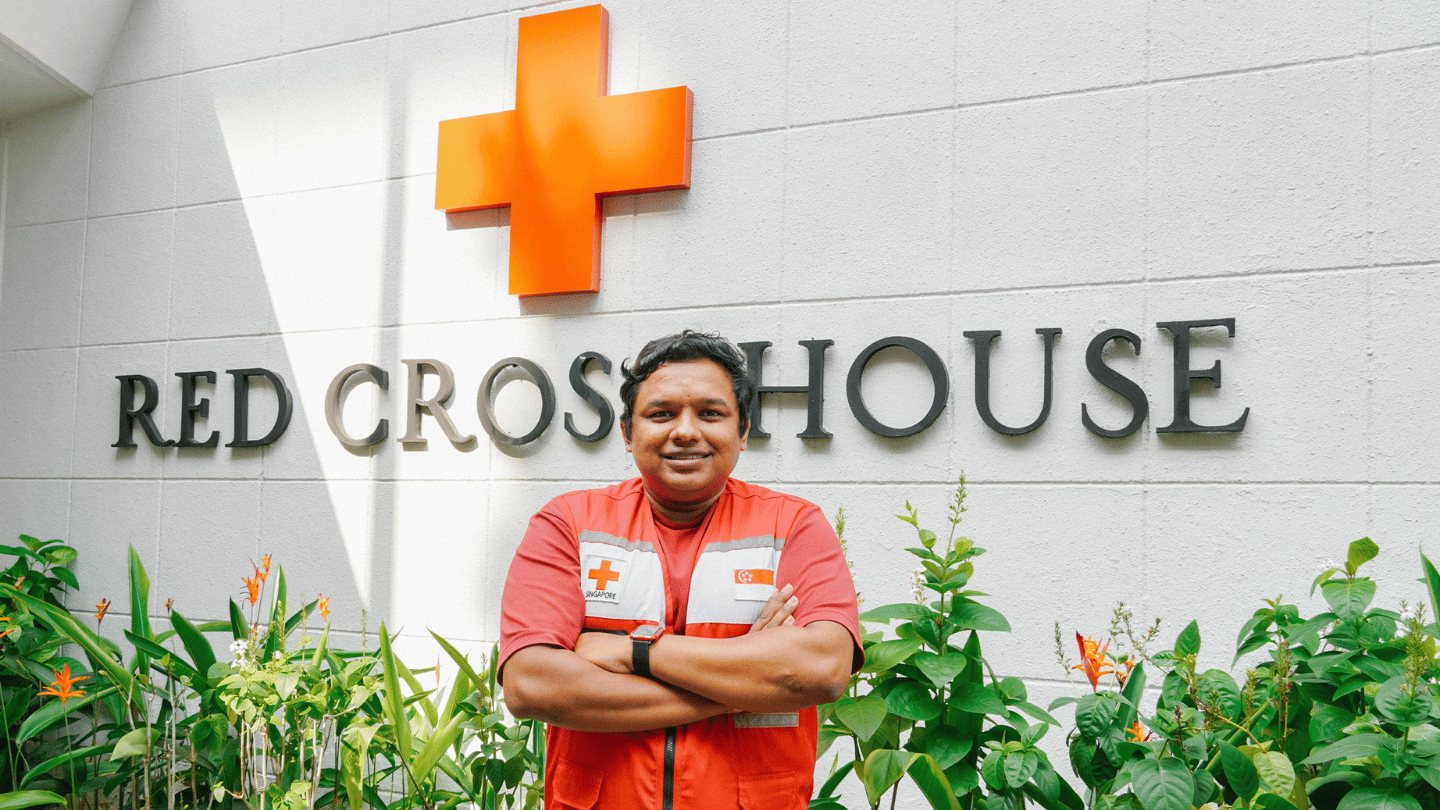
At 21, Daniel Samuwel watched helplessly as his friend was physically assaulted near a fire station. By the time the Singapore Civil Defence Force (SCDF) officers saw them, the perpetrators had already fled. As the officers tended to his injured friend, Daniel could only stand by, unsure of how to help.
“They knew what to do, while I stood there not knowing how I could help. It was probably the first time I truly understood the importance of having first aid knowledge.”
A year later, during his National Service, Daniel asked to be trained as an Emergency Medical Technician (EMT) medic. That decision would eventually lead him to the Singapore Red Cross (SRC), where he continued to develop his first aid skills.
Years later, while returning from sending a client for a medical appointment as part of the SRC’s Medical Chaperone & Transportation team, Daniel came across a road traffic accident involving a lorry and two motorcycles.
“When I saw the situation, my first instinct was to help. I told my partner to stop the vehicle, but before rushing in, I reminded myself of something I learnt during my training: always check for danger first.”
Once it was safe, he approached one of the injured motorcyclists and provided first aid while waiting for the paramedics to arrive.
“At that point, I did not really think about anything else. My training from SCDF and my experience with the Singapore Red Cross took over. Honestly, I only had one thought on my mind: ‘What can I do right now to help this person?’”
Looking back, Daniel says the experience showed him how far he has come.
“At 21, I was the person standing by helplessly, wanting to help but not knowing how. Years after that, I found myself in a real emergency, stepping forward because I had the knowledge and confidence to do so.”
His message to others is simple: “You do not need to be a medical professional to make a difference. Basic first aid skills can be learnt by anyone, and with practice, you can gain confidence in knowing how to help someone in need. It’s also not just about treating physical injuries. Psychological first aid is another way you can help, by comforting and supporting someone experiencing emotional distress during an emergency.”
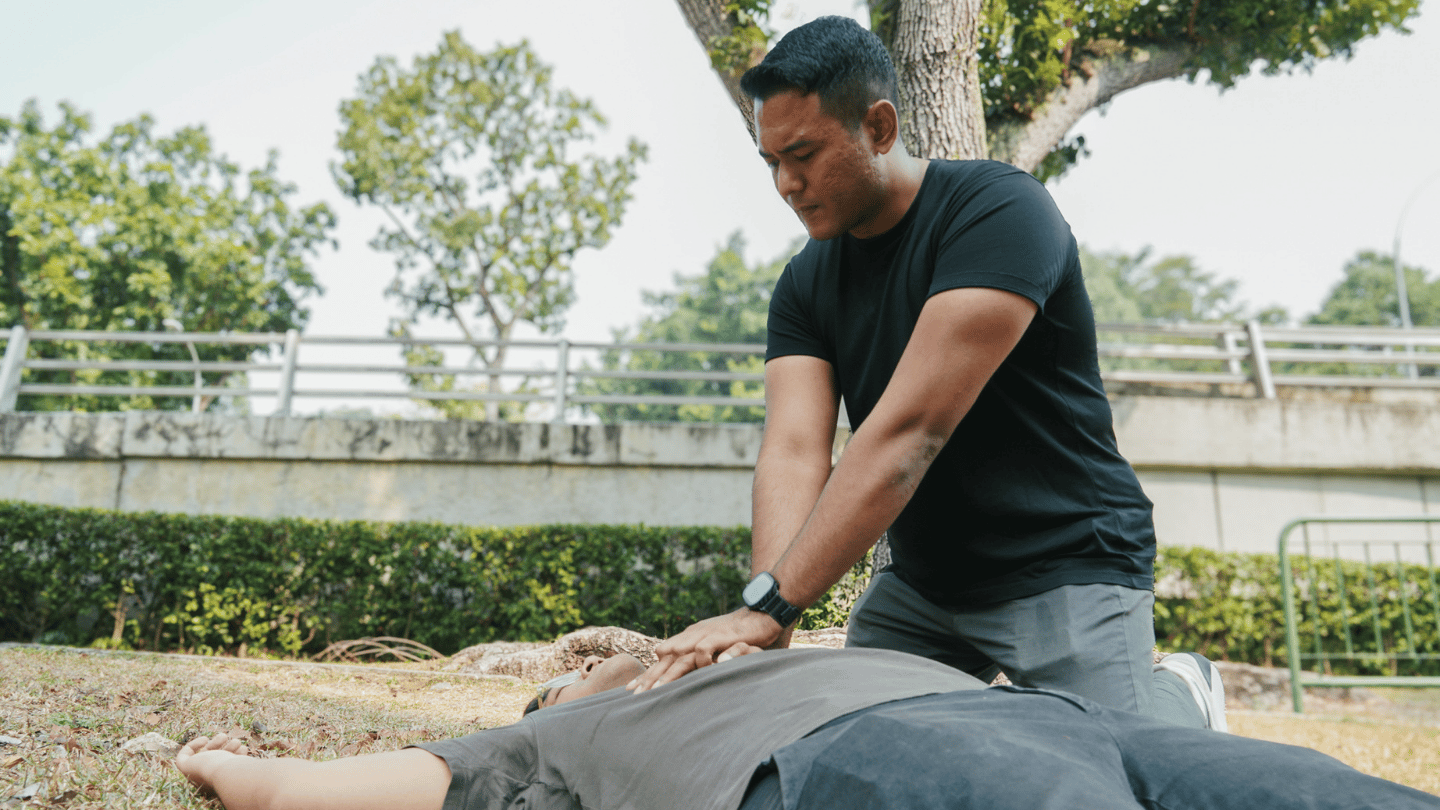
It was an ordinary lunch break for Muhammad Syaiful, until his neighbour alerted him to an elderly man lying at the foot of his block.
“I immediately rushed down to assess the situation and check if he was alright.”
When the man did not respond, Syaiful immediately started cardiopulmonary resuscitation (CPR) while his wife looked for an Automated External Defibrillator (AED). As passers-by gathered, one of them took over the CPR while he set up the AED.
“At that point, I focused on staying calm and doing whatever was needed. There wasn’t really time to overthink the situation. My priority was simply to keep going and give him the best chance possible until help arrived.”
What strikes Syaiful is how quickly a lunch break turned into an emergency.
“I didn’t really think about whether I was the right person to step in. I just knew that someone needed help, and I had the knowledge and ability to do something while waiting for the professionals to arrive.”
Through his work with the Singapore Red Cross, Syaiful had the opportunity to learn first aid — skills he would unexpectedly put to use close to home. That day, he saw just how important it is to be ready to act when it matters.
“You don’t need to be a medical professional to step forward. Having basic first aid knowledge means you can stay calm, assess the situation and do what you can within your ability. You never know when someone might need your help, but when the moment comes, you may be the person who can make a difference.”
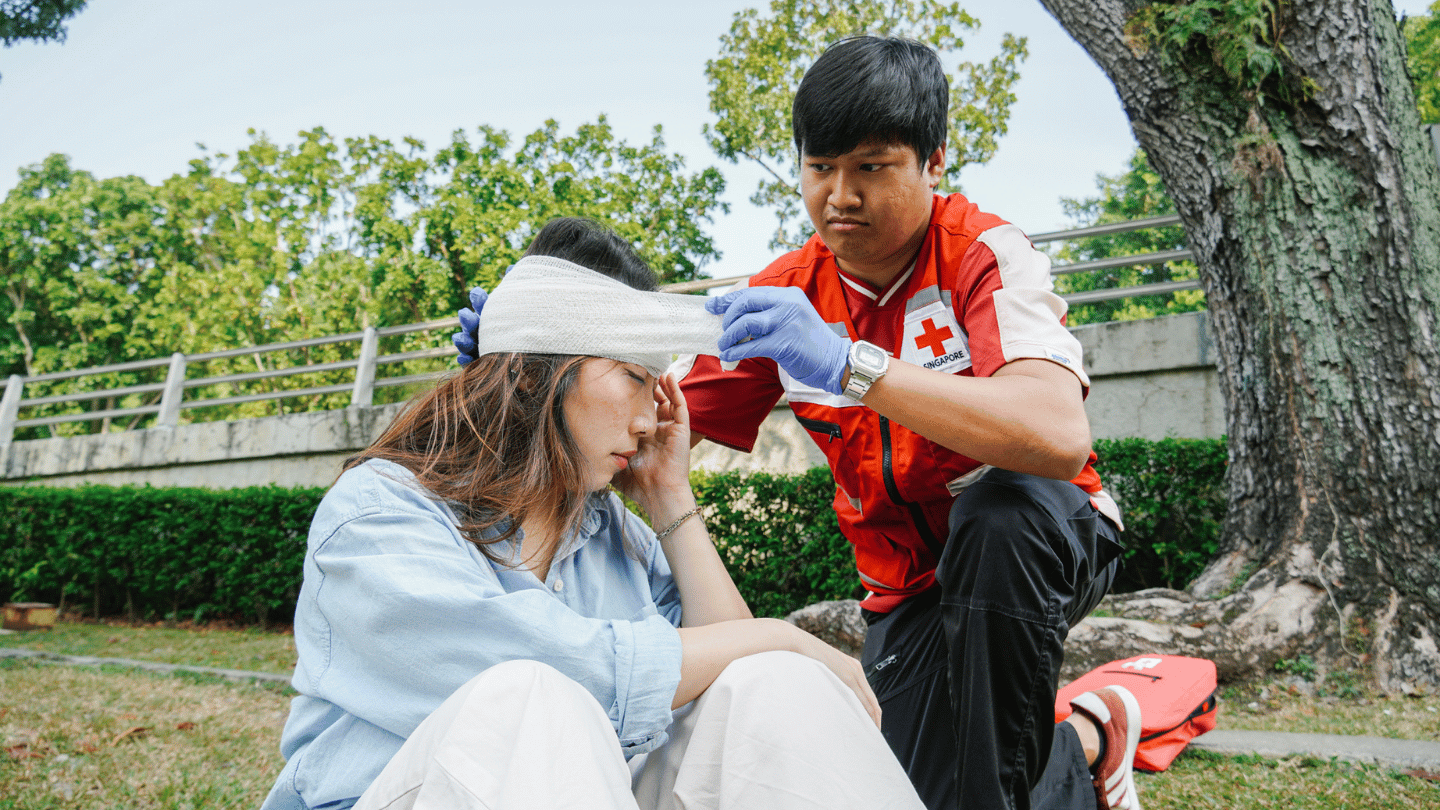
During his Polytechnic days, Muhammad Zulhaziq once watched a student from a neighbouring class suffer a seizure.
“The whole situation was very chaotic, and only one person knew how to properly render first aid to the affected student while the rest of us stood frozen, unsure of what to do. That person was my Facilitator.”
Watching how calm and skilled his Facilitator was inspired him to learn first aid himself.
“I wanted to be someone who could step up and help another person during an emergency instead of freezing and not knowing what to do.”
When he enlisted for National Service, he trained as a medic and eventually attended to numerous medical cases. One case in particular, involving a recruit experiencing a potentially life-threatening condition, has stayed with him.
“I knew that I had to remain calm. I reminded myself that I was a medic, and that they were depending on me to help save the recruit.”
Today, as part of the Singapore Red Cross, Zulhaziq hopes to encourage others to develop that same readiness. For him, it starts with having the right mindset.
“The willingness and courage to help others ultimately come from within yourself. You need to have the right mindset and understand that when you are trained to help others, you must be willing to step forward, remain calm and have the courage to act.”
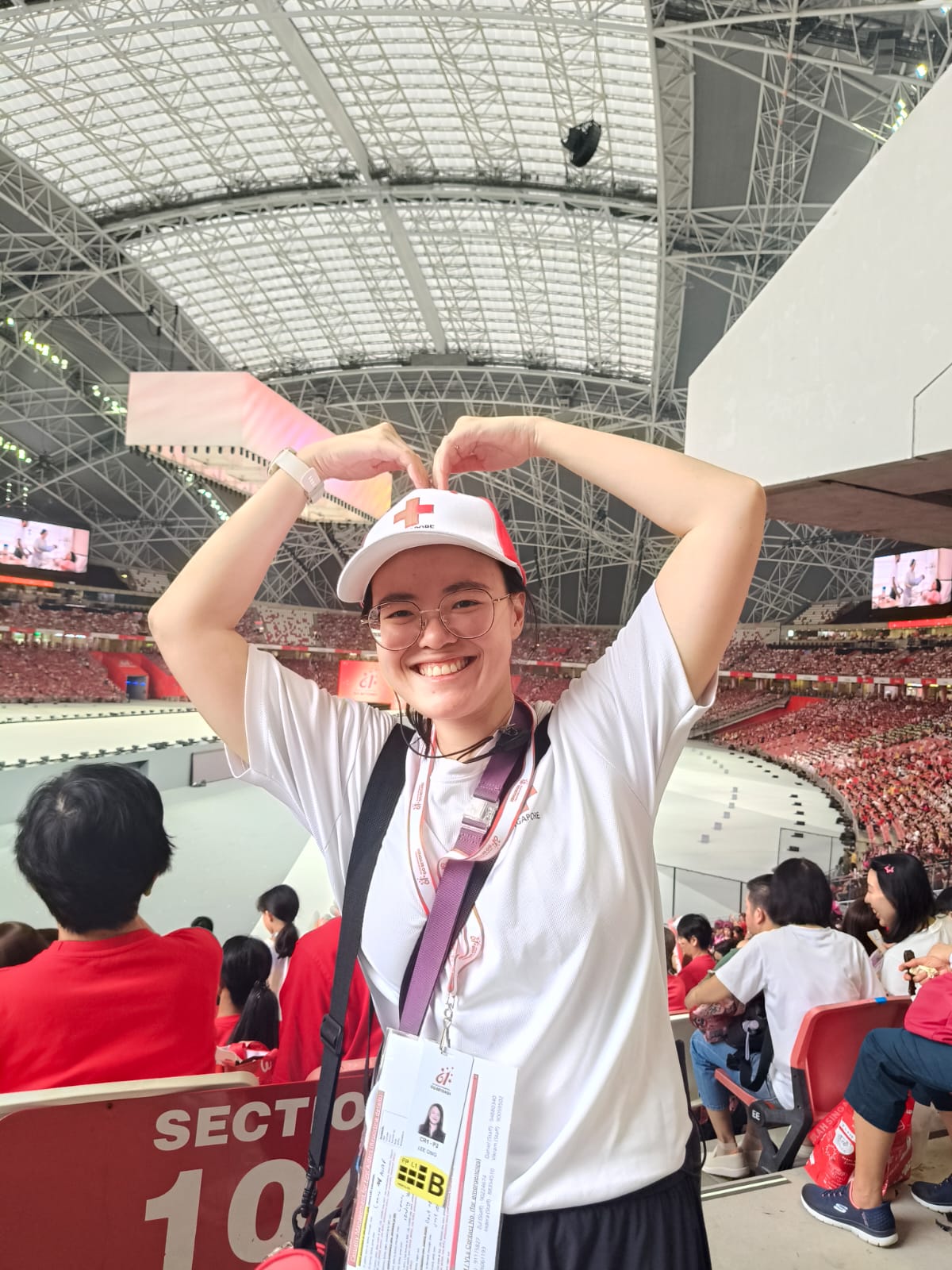
While on first aid duty at this year’s National Day Parade, Lydia was alerted to a student experiencing a prolonged nosebleed. Stepping away from her station to assist, she found the student in the washroom with two teachers and a pile of blood-stained tissues beside her. The student was no stranger to nosebleeds, but this one had lasted longer than usual.
“As a first aider, nosebleeds are tricky as the only thing that can be done is to pinch the nose at the right position and wait.”
There was little else to do but wait and keep the student comfortable. So, Lydia focused on chatting with the student to keep her spirits up. Eventually, the bleeding stopped and the student was able to enjoy the rest of the show.
For Lydia, the experience was a reminder that first aid does not always have to be daunting.
“Start small — learn first aid to use at home or at work. Join us at various Red Cross volunteering events to expose yourself to working with strangers and the public, and eventually you’ll be comfortable enough to step forward to help others in need.”
Across their different experiences, one thing remains the same: none of them set out expecting to use their first aid skills that day. They simply found themselves in a moment when someone needed help, and were ready to respond.
You never know when that moment might come. But when it does, will you know what to do?
Stay prepared by equipping yourself with the right knowledge and confidence through our courses at the Singapore Red Cross Academy!